Stienen · internship
FarmConnect mobile app
A Flutter app that brings Stienen's FarmConnect platform to phones, with remote control and dashboard widgets that update live. My internship project, which the company called "much more than a proof of concept".
- Widget definitionsXML, the same as on the controllers' screens
- Widget service.NET: adds data, translations and units(my part)
- SignalRpushes updates when a value changes(my part)
- Flutter appa dashboard the user arranges(my part)
The problem
FarmConnect is Stienen’s platform for the climate controllers in barns. Farmers and installers used it through a web app that was built around the controllers’ own screens, and it didn’t work well on a phone. My internship assignment was to find out how FarmConnect could become mobile-friendly, and then build it.
Research first
Before writing any code I looked at what users needed. I ran a survey among farmers and installers (77 responses), wrote four personas (farmer, installer, salesperson and developer) and scanned the competition: every competitor already had an app.
That led to a hybrid advice. A new mobile app that takes over the platform’s functions step by step, but that gives direct access to everything from day one through remote control of the controller itself.
What I built
- Login with Auth0, with a token for the FarmConnect API. I reworked the authentication so users’ tokens don’t stay in the app where they aren’t needed.
- A customer picker for installers. Installers look after many farms, so they first pick a customer, and every device shows whether it’s online.
- Remote control, also on iOS: a full copy of the controller’s own screen, with every option on the device. The app asks you to turn your phone sideways to make room for it.
- A dashboard per device that users arrange themselves: add, remove and reorder widgets. How many widgets fit on a row follows the width of the screen.
- A .NET service that builds the widgets. It reads the controllers’ existing widget definitions (XML), fills in the data, translations and units, and works out small expressions such as on/off or good/bad. The app gets the result as JSON and draws it. When a value changes, SignalR pushes an update to only the widgets that use it.
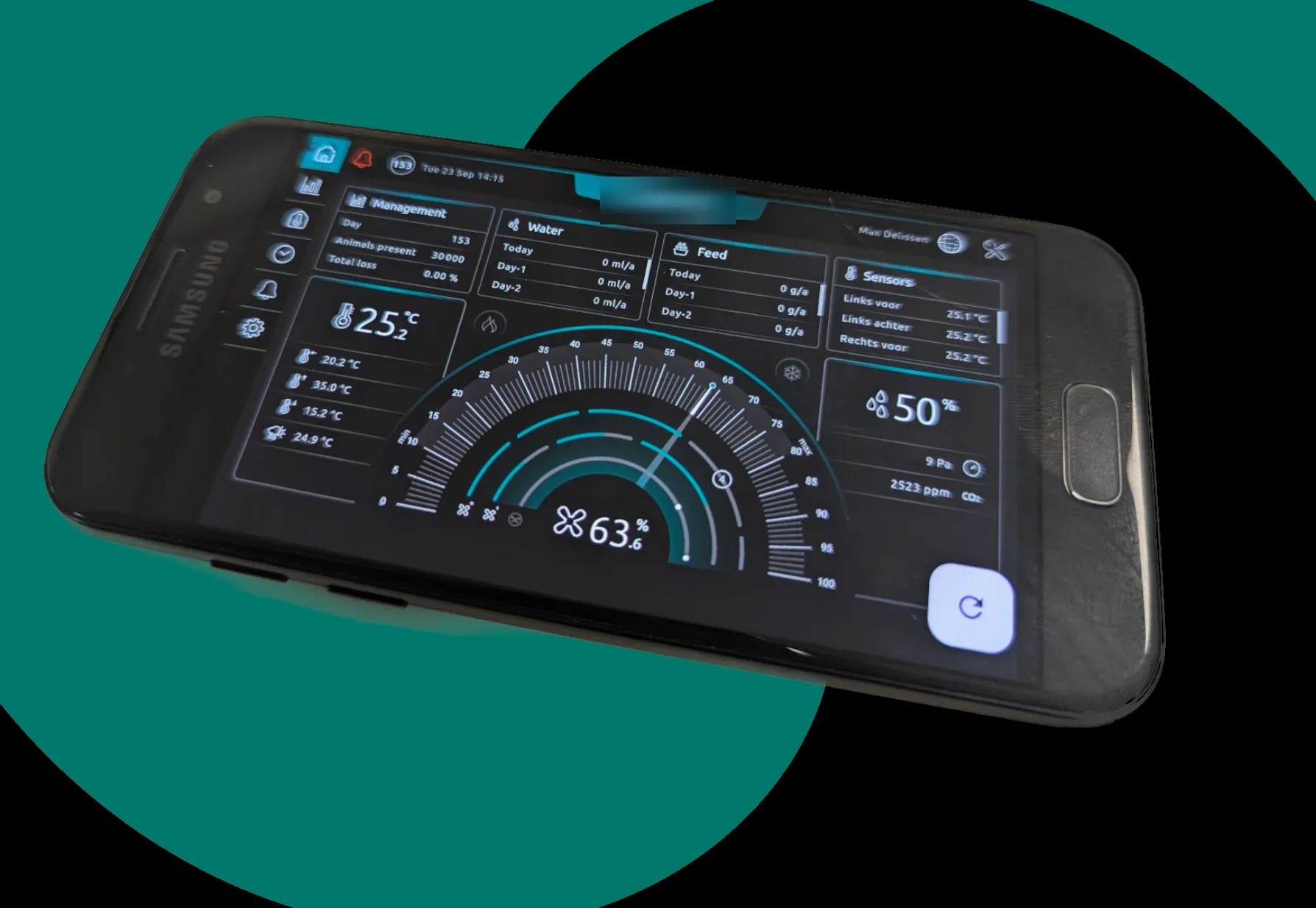
The decision behind the widgets
The controllers’ widgets exist in several versions, and the app had to show them without breaking older systems. I spent a full week on research for this and had nothing to show for it at the end of that week.
My first proposal was to load a widget’s complete user interface as JSON and turn it into Flutter widgets at runtime. I had also built a small demo of server-driven UI with Remote Flutter Widgets. The other developers found the idea too complex. After a week of discussing options with them, we chose to compose the widgets in the backend as much as possible, and let the app only put them in the right layout.
That has two results I like: the app stays light, and a change to a widget doesn’t need a new release of the app.
Quality
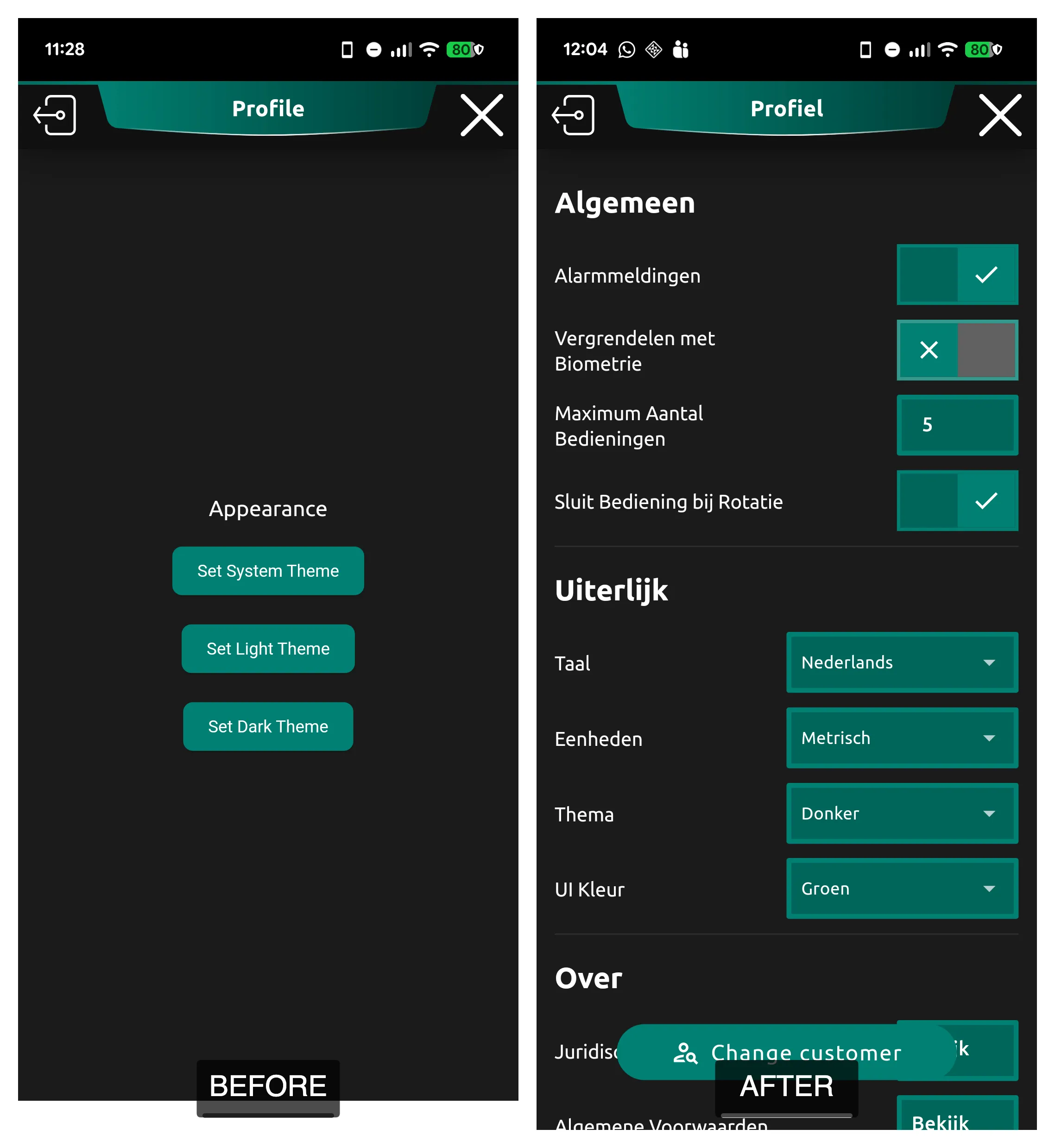
After feedback at my midterm review I introduced unit tests, which the team didn’t use until then. At the end I wrote a handover document: what works, what still needs doing, and where everything is.
What went wrong, and what I’d do differently
- The widget service is a proof of concept. It sends generated demo data, with an interface ready to connect real data, but it was never connected to live controllers. Versioning of the widgets is also only partly done.
- The company’s tip, twice: share more with colleagues. I’d show my work earlier and more often next time, instead of when it’s finished.
In the company’s words
“The end result is much more than a proof of concept. The app is almost ready for real-world use.”
Company mentor, internship 2025
My part and the team’s
I built the app and the widget service myself, as an intern in the R&D team. The FarmConnect platform, its API and the widget definitions already existed. The widget architecture was decided together with the Flutter developer and the backend specialists.
Status
Stopped: Stienen chose not to develop the app further after my internship. After the internship they offered me a part-time job in R&D, where I now work on the AI assistant and the translation tool.