RZL Haelen website
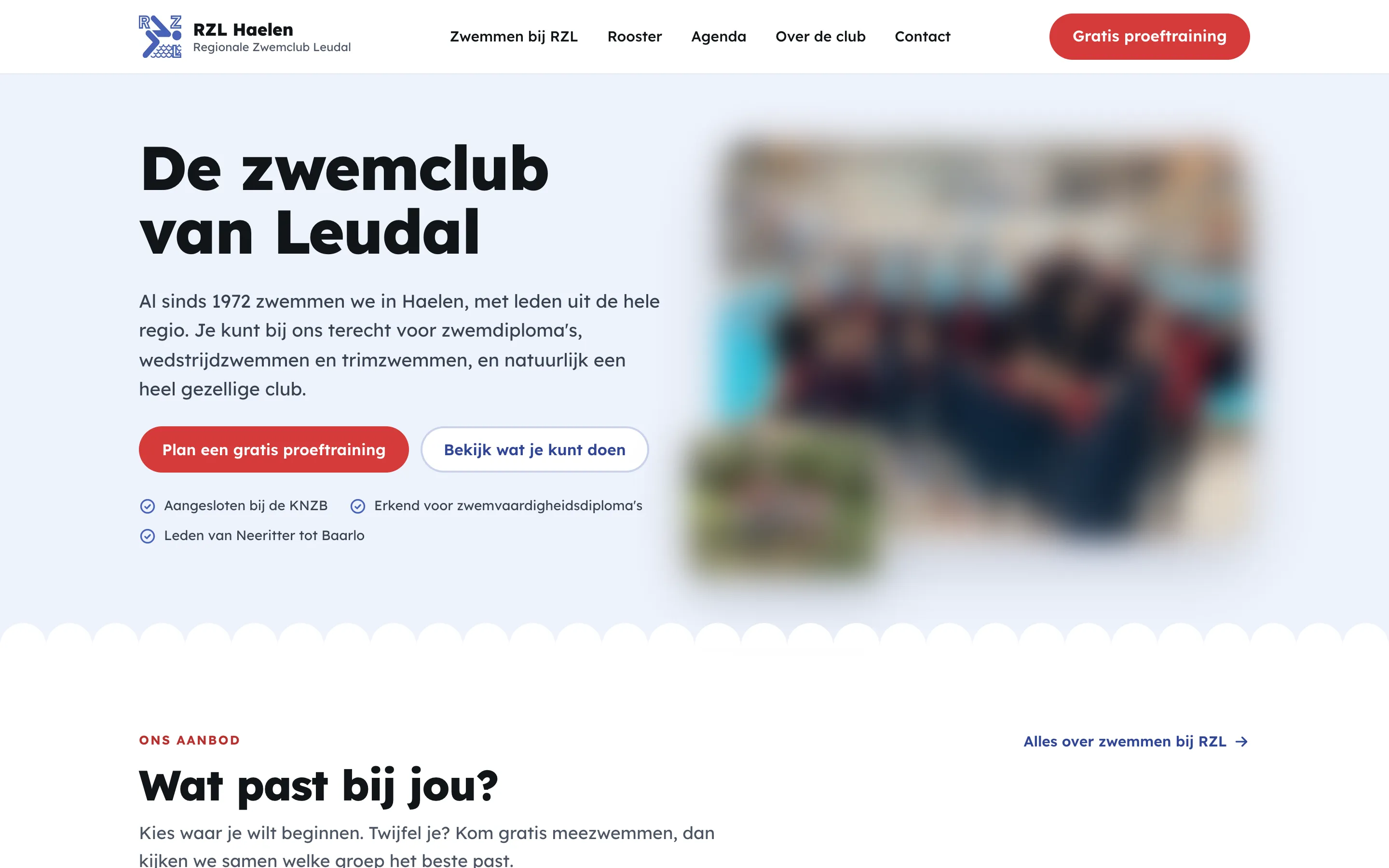
A website for my swimming club that volunteers can update themselves. On the way, I moved the old site and the club's e-mail before the hosting contract ran out.

The problem
My swimming club’s WordPress site was outdated, tied to one hosting contract, and only a few people could edit it. Whatever replaced it had to be cheap, safe, and maintainable by volunteers, also if I stop.
What I built
- First, a full club platform, as my individual project in semester 6: a Flutter web app and two .NET 10 APIs on a Raspberry Pi. I load-tested it up to 500 virtual users and cut the p95 response time from 2.2 s to 1.36 s with output caching. Then I decided it was too complex for a club: the swimming federation’s own system can cover member administration, and nobody else could have maintained it.
- When the hosting contract ended in October 2026, I moved the mailboxes and the domain, and turned the WordPress site into a static copy on Cloudflare Pages: no trackers (so no cookie banner), old links redirected, and e-mail addresses hidden from scrapers. It has been live since 21 October 2026.
- Now I’m building the new site in Astro. All content (agenda, training schedule, groups, sponsors) lives in content files that volunteers edit through Pages CMS. Every save becomes a commit that GitHub Actions checks, builds and publishes as a preview.
- Anything that depends on today’s date, like “training today” or upcoming events, is worked out in the browser, so the site never needs a nightly rebuild. Each group gets its own calendar feed.
- The contact form runs as a Cloudflare Function with a spam check and sends through the club’s own mailbox. If sending fails, it falls back to the visitor’s mail app.

What went wrong
My first solution was much more than the club needed. The best system for volunteers is the one they can keep running without me.
Status
The temporary site has been live since 21 October 2026. The new site is a work in progress, with a preview online.